


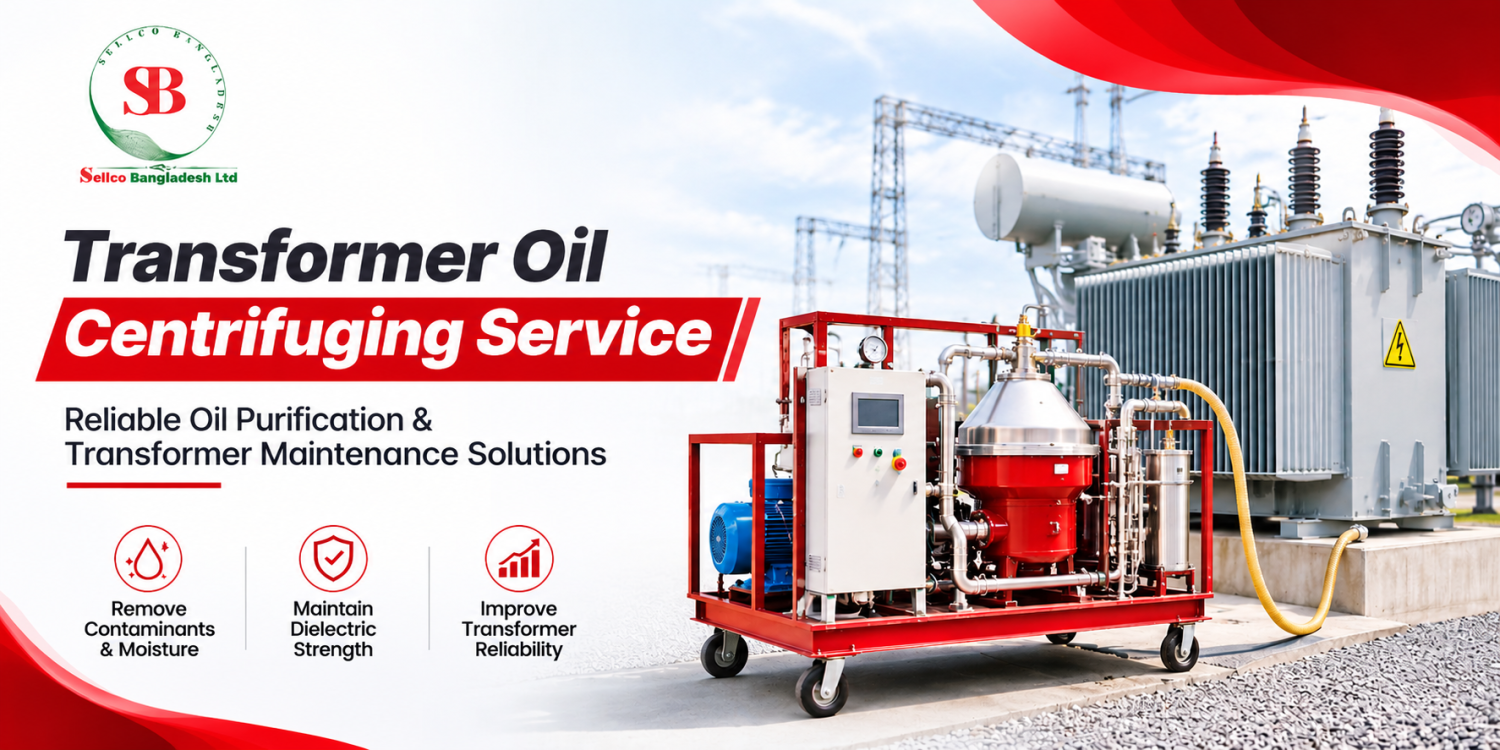
Transformer Oil Centrifuging Service in Bangladesh
Introduction
Transformers play a vital role in electrical power distribution, industrial manufacturing, and commercial operations. To ensure reliable performance, transformers require proper maintenance, especially when it comes to the quality of insulating oil.
Over time, transformer oil can become contaminated with moisture, dust, suspended particles, and other impurities. These contaminants can reduce insulation performance, increase the risk of overheating, and contribute to unexpected transformer failures.
At Sellco Bangladesh Ltd, we understand the importance of maintaining efficient and reliable electrical systems. Transformer oil centrifuging and purification are essential maintenance solutions that help protect valuable equipment and support uninterrupted industrial operations.
What Is Transformer Oil Centrifuging?
Transformer oil centrifuging is a specialized oil treatment process that uses centrifugal force to separate free water and certain suspended contaminants from transformer insulating oil.
During this process, contaminated transformer oil passes through a high-speed centrifuge. The centrifugal force separates heavier contaminants from the oil, helping improve its cleanliness.
Depending on the condition of the oil, additional filtration, vacuum dehydration, or degassing may be required to achieve the desired oil quality.
The main objectives of transformer oil centrifuging include:
Removing free water and separable impurities
Reducing suspended contaminants
Supporting dielectric insulation performance
Improving transformer oil cleanliness
Maintaining reliable transformer operation
Supporting preventive maintenance programs
Proper oil treatment helps maintain transformer performance and reduce contamination-related operational risks.
Why Is Transformer Oil Centrifuging Important?
Transformer oil performs two essential functions: providing electrical insulation and transferring heat away from internal components.
When oil becomes contaminated, its ability to perform these functions may deteriorate.
1. Improves Electrical Insulation
Moisture and impurities can reduce the dielectric strength of transformer oil. Appropriate oil purification helps maintain the insulating properties required for safe and reliable transformer operation.
2. Supports Efficient Cooling
Transformer oil helps transfer heat generated during electrical operation. Maintaining proper oil condition supports effective cooling and helps protect internal components.
3. Reduces Unexpected Downtime
Contaminated transformer oil may contribute to insulation deterioration and equipment failure. Regular testing and maintenance help identify potential problems before they cause costly interruptions.
4. Protects Transformer Components
Proper oil maintenance helps reduce contamination-related deterioration of transformer insulation and internal components, supporting long-term equipment reliability.
5. Supports Cost-Effective Maintenance
Preventive oil maintenance can help reduce avoidable repair costs and support better equipment lifecycle management.
Common Causes of Transformer Oil Contamination
Transformer oil can become contaminated due to various environmental and operational factors.
Moisture Contamination: Water may enter through damaged seals, improper handling, or exposure to humid conditions.
Dust and Solid Particles: Suspended contaminants can enter during maintenance, oil transfer, or equipment operation.
Oil Oxidation: Prolonged exposure to oxygen and elevated temperatures can contribute to oil degradation, acidity, and sludge formation.
Aging of Insulation Materials: Internal insulation components may gradually deteriorate and release degradation by-products into the oil.
Improper Oil Storage: Poor storage and handling practices can introduce moisture and foreign materials.
Regular oil testing helps identify contamination and determine the most appropriate treatment method.
How Does Transformer Oil Centrifuging Work?
Transformer oil centrifuging involves several important steps to help restore and maintain oil cleanliness.
Step 1: Initial Oil Inspection
Transformer oil is inspected and tested to evaluate its condition. Relevant parameters may include moisture content, dielectric breakdown voltage, acidity, and particle contamination.
Step 2: Equipment Preparation
The appropriate centrifuging and filtration equipment is prepared according to the transformer specifications and maintenance requirements.
Step 3: Oil Circulation
Transformer oil is circulated through the treatment system using suitable pumps and hoses.
Step 4: Centrifugal Separation
Inside the centrifuge, high-speed rotation separates free water and certain suspended contaminants from the oil.
Step 5: Additional Oil Purification
When necessary, the oil may undergo fine filtration, vacuum dehydration, or degassing to address contaminants that centrifuging alone cannot remove.
Step 6: Final Quality Testing
After treatment, the oil is tested again to determine whether it meets the applicable maintenance and manufacturer requirements.
All transformer oil treatment procedures should be performed by qualified personnel using appropriate electrical safety measures.
Transformer Oil Centrifuging vs. Oil Filtration
Although transformer oil centrifuging and filtration are related maintenance processes, they serve different purposes.
Transformer Oil Centrifuging: Uses centrifugal force to separate free water and certain suspended solid contaminants.
Transformer Oil Filtration: Uses filtration media to remove solid particles according to the selected filter rating.
Vacuum Oil Purification: Uses controlled vacuum conditions to remove moisture and dissolved gases from transformer oil.
For heavily contaminated oil, a combination of treatment methods may be required.
When Does Transformer Oil Need Servicing?
Transformer oil should be inspected and evaluated regularly to identify potential contamination and deterioration.
Common indications that oil treatment may be necessary include:
Reduced dielectric breakdown voltage
Excessive moisture content
Increased suspended particle contamination
Presence of free water
Abnormal oil test results
Deteriorating oil condition during inspection
Maintenance recommendations based on transformer condition
However, centrifuging cannot correct every type of oil deterioration. Severely oxidized or degraded oil may require specialized reclamation or complete replacement.
Applications of Transformer Oil Centrifuging Services
Transformer oil maintenance is important across many industrial and commercial sectors in Bangladesh.
Textile and Garment Industries
Textile factories depend on reliable electrical power for continuous production. Proper transformer maintenance helps minimize electrical interruptions and supports manufacturing efficiency.
Power Plants and Electrical Substations
Power generation and distribution facilities require dependable transformers to maintain stable electrical operations.
Industrial Manufacturing Facilities
Manufacturing plants rely on transformers to operate heavy machinery, production equipment, and electrical systems.
Commercial Buildings and Industrial Complexes
Large commercial facilities and industrial complexes benefit from preventive transformer maintenance to support dependable electrical infrastructure.
Benefits of Professional Transformer Oil Maintenance
Regular transformer oil testing and appropriate treatment offer several operational advantages.
Helps maintain transformer oil cleanliness
Supports electrical insulation performance
Reduces contamination-related equipment risks
Helps prevent avoidable maintenance problems
Supports efficient transformer operation
Reduces the risk of unexpected production interruptions
Helps protect valuable electrical equipment
Supports long-term transformer reliability
The effectiveness of any oil treatment depends on the condition of the transformer, the type of contamination, and the selected maintenance procedure.
Why Choose Sellco Bangladesh Ltd?
Reliable industrial operations depend on proper equipment maintenance and effective technical solutions.
At Sellco Bangladesh Ltd, we are committed to supporting Bangladesh's industrial sector with dependable products and maintenance-related solutions.
We understand the challenges faced by textile factories, manufacturing plants, power facilities, and commercial industries when maintaining critical electrical equipment.
Our focus is on helping businesses identify suitable industrial solutions that improve operational efficiency, reduce maintenance risks, and support long-term equipment performance.
Frequently Asked Questions (FAQ)
What is transformer oil centrifuging?
Transformer oil centrifuging is a process that uses centrifugal force to remove free water and certain suspended contaminants from insulating oil.
Why is transformer oil purification important?
Oil purification helps manage contamination that can reduce dielectric strength, affect insulation performance, and contribute to transformer deterioration.
Can centrifuging remove all moisture from transformer oil?
No. Centrifuging primarily removes free water. Dissolved moisture generally requires additional treatment, such as vacuum dehydration.
How often should transformer oil be serviced?
Maintenance frequency depends on transformer condition, operating environment, oil test results, manufacturer recommendations, and applicable maintenance standards.
Can transformer oil be reused after centrifuging?
Transformer oil may remain suitable for use after treatment if testing confirms that it meets the relevant quality requirements. Severely degraded oil may require reclamation or replacement.
Does transformer oil centrifuging increase transformer lifespan?
Proper oil maintenance can help reduce contamination-related deterioration and support equipment reliability, although it cannot guarantee a specific extension of transformer service life.
Supporting Bangladesh's Industrial Power Infrastructure
Bangladesh's growing textile, manufacturing, and industrial sectors depend on reliable electrical infrastructure.
Transformers are essential components of these operations, and maintaining proper insulating oil quality is an important part of protecting electrical equipment.
At Sellco Bangladesh Ltd, we aim to support industrial businesses with practical solutions that promote productivity, reliability, and operational efficiency.
Upgrade Your Transformer Maintenance Today
Reliable transformer operation starts with effective maintenance and proper oil management.
Whether you operate a textile factory, manufacturing plant, electrical substation, or commercial facility, maintaining transformer oil quality can help protect equipment and reduce avoidable operational risks.
Contact Sellco Bangladesh Ltd to discuss your transformer oil centrifuging and purification requirements and explore suitable maintenance solutions.
Sellco Bangladesh Ltd
Phone: +880 1737-042829
Website: https://sellcobd.com/
Sellco Bangladesh Ltd – Your Trusted Partner for Industrial Solutions.
Signup For Newsletter
we'll never share your email address with a third-party
Be A Seller
Apply NowContact US
- Address: Elite House (6th floor),54, Motijheel C/A, Dhaka 1000.
- Phone: +8801737-042829
- Email: info@sellcobd.com


